
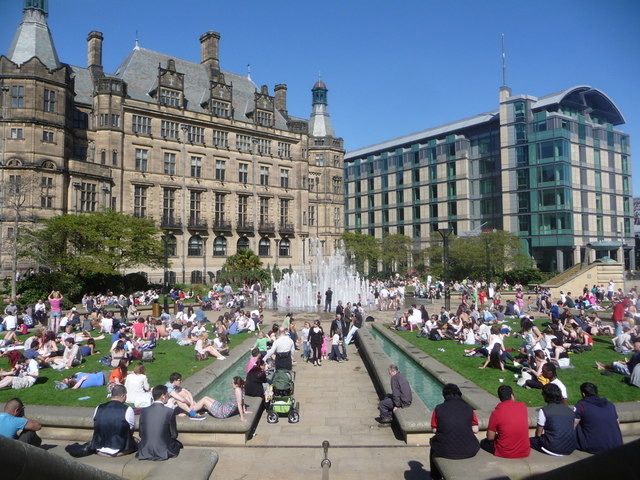
Encouraging Engagement – Citizen’s UK


I am holding up Citizens UK as an example, not because it is exactly what is needed here but because it is an organisation that is dedicated to this task that I am exploring. It was launched in 1989 and it says its aim is to

is to locate a much stronger and better organised civil society at the heart of UK governance and public life

It has a staff of 70 of which 45 are professional community organisers.  They organise in Chapters and Projects. Amongst their projects are:

According to Wikipedia it is also behind

The one I have known about for a long time is the Living Wage Foundation. That started rising over about the time that the government brought in Living Wage legislation in 1998. The campaign basically challenges employers to pay the amount that means employees can live off it rather than the minimum permitted. It has been embarrassing how many church organisations not only do not pay a living wage but seek to circumvent the minimum wage legislation.  I accept volunteers may be paid ‘pocket money’ if they are looked after in other ways but this should not exceed a year and it certainly should not include them paying their own way. So I knew of their campaigns but not really about them.

On the whole, left of centre concerns but are aimed at developing people’s involvement with it rather than running political campaigns. As such this fits largely where I stand on left of centre radical politically.

It is interesting that they were founded in 1989. 1989 was not a great year for me but I survived. However, the years following were some of the most depressing I have experienced. I can remember after the 1990 election when John Major got in a flatmate was so dischuffed that he, despite being a bright PhD student was threatening to leave the country. I also can remember very strong concerns being raised about social exclusion and those who were not included in civic society. This is the background against which Citizens UK was formed.

My one caution is the way the campaigns seem to be run as distinct entities and the central organisation is not a central focus. This was to such an extent that when I was asked to look at them I could not recall hearing about them before. I have suspicions that the information on the central website is out of date.  I am by PhD training a social anthropologist and though I can do some mild internet stalking what I wanted to do was participant observation. So I signed up to see what would happen.  If it got similar to petition holding sites where I get bombarded by other worthy petition after signing one I was going to pull back pretty quickly.  Indeed my caution stopped me from signing up fully. I got stuck on the volunteering options:

  • I’d like to help provide homes for refugees
  • I’d like to help secure a living wage for UK workers
  • I’d like to be involved in the Citysafe Campaign
  • I’d like to assist the Social Care Campaign
  • I’d like to volunteer with the Just Money campaign
  • I’d like to help with the Good Jobs Campaign
  • I’d like to be involved with Citizens Commission on Islam, Participation & Public Life

I am not sure what I am volunteering for. If providing homes for refugees is low-level campaigning then fine. However, if it is opening my home then I am much more cautious. Now I am not sure if I have time or energy to be involved in any of those so I get stuck at the signing in stage at this point and cannot progress to becoming a member.

Then fate took a hand.  I have a friend who is involved with the Churches Refugee Network and indeed has written a book of the Bible and Refugees. I also have some back-story in that, I was born in South Africa. My mother’s family goes back four or more generations and my Dad was sent by CWM to work in   Adams College at the Federal Seminary. As such, my background is liberal white but in a situation that was politically charged under Apartheid. When my father’s five-year contract was up it was clear that the powers did not like the idea of his contract being renewed. My Dad was British, my Mum had taken British citizenship and so I had it as well. We, therefore, returned to the UK with no employment for my parents. In other circumstances, seeking asylum is not that far from my story. Friends of my parents did seek asylum here. The result is that Refugee and Asylum are topics which I am likely to engage with. That is why I participated in the University of Sheffield’s Big Walk last year. Thus, when the repeal of the Dubs Amendment happened it was something I was looking to engage with. That Citizens UK were organising a petition was a coincidence. The question is “how well did they succeed in engaging me with the campaign?”

First thing, that was notable was that they followed up on signing the petition with an immediate request for you to donate to a charity involved in Refugee and Asylum campaigning Safe Passage. It is not Citizens for Sanctuary mentioned above and is clearly linked still with Citizens UK.  This was a noted change. The communication I have had with them since has focussed on this issue. They have asked and helped me write to my MP through using Nationbuilder Platform. It is a platform used by Brexit and the Trump campaign; I am ambivalent over this. On the one hand, I am not pro Brexit or Trump’s policies; on the other hand, both these campaigns were very successful at getting ground level support out. If this is a truly politically neutral software then the left and the radical need to be using it or building as good or better tools.

The difference between them and other petition organisations is that they have consistently sought to engage me further with that that I had shown an interest in rather than sending me random other petitions. This has continued with the invite to an online meeting with Alf Dubs to discuss the way forward. So far I am on board. I will see where this leads.

What they also do it have local chapters. There are at present ones are: North London Citizens, South London Citizens, TELCO (The East London Citizens Organisation), West London Citizens, Thames Valley Citizens UK, Nottingham Citizens, Citizens UK BirminghamCardiff and the Vale of Glamorgan CitizensLeeds Citizens, Tyne & Wear Citizens and Greater Manchester Citizens. There is not one in Sheffield, that means really that Associate membership is the way forward.

My conclusion so far is that this is a good organisation for drawing people into civic engagement provided that their interests are in line with the campaigns it is running. The campaigns, on the whole, are admirable. I would like to know more about how local chapters work, especially those outside of London. For instance, whether they seek to set up local groups to support the national campaigns, whether they seek to help local civic groups grow that are already established or whether they seek to run local campaigns on issues where there are not other campaigns going.

Now I have cautions.  Firstly if you are to develop civic engagement then you really need to be building on what is there. The more groups interact the stronger the civic culture is. At present, it seems as if Citizens UK works by drawing people into the civic debate but rather than then connecting them with what already exists they set up a new organisation. However, this results in the setting up of more and more highly focussed institutions and encourages a specialisation in the interaction. Questions I would like them to ask before setting up a new campaign group are:

  • Is there a campaign organisation who are already trying to target this issue?
  • Is there ways we can work with this organisation, not just to recruit people but to make them a more effective institution?

The other big question comes from my vision of civic society as more than campaign groups with their socio-political agenda into the more broadly focused community groups. Can a group like this encourage membership of groups that are not specific campaign groups whether they are service, support, interest or broad friendship group?

Imaging a Vibrant Civic Culture

There are two levels to this. The big level is the institutional one and the small level which is the individual. We need a model that sees these not as in opposition but as complimentary,
Institutional Ecology

Firstly let me deal with the fact that we have a limited understanding of institution largely formed by work of Foucault and Goffman who worked with big or total institutions. In fairness to Foucault, his institutions were the creation of society and not the actual organisations that society had created. As a result, we tend to think as institutions as complex organisations that have legal structure and seek to control the behaviour of those who come under their care. The archetype is the Total Institution where it is possible for an individual to exist in an artificial environment that takes complete care of their needs and seeks to make them behave according to its aims. The classic example is the asylum, but you can think of Radical Reformation Churches as striving to do this.

What I want to introduce are two different concepts that together reshape the whole way we look at institutions. The first I am going to call the partial institution. It does not desire to be everything to everyone but has limited and well-defined aims. The second is the meta-institution which is an institution that seeks to do things for other institutions. This might be to provide venues for them to meet, provide legal advice, provide training or build alliances between different partial institutions.  Total and total-like institutions do not need these meta-institutions; they have the resources internally to meet these needs. However, partial institutions by their limited nature do require these sort of institutions.

Now I can get down to specific. Most of a good civic culture would not be made up of big or total institutions and civic culture itself is not a total institution.  Rather it is an ecology of partial institutions with meta-institutions existing symbiotically with the other partial institutions.  The partial-institutions would be numerous and diverse. The roles that they fulfil within the ecology would differ as their aims differ and there is no sense that one shape fits all. The legal framework in which they exist would seek to be commensurate with the purposes that they exist for and not force a conformity of organisational structure. It would be totally normal for these partial institutions to be formed and to close. A healthy ecology is marked by the creation rate being equal to or exceeding the closure rate and the mean survival time being a reasonable but not excessive time. There would be enough interconnections between partial institutions that the ecology is connected.

Let me expand that last sentence to deal with meta-institutions. There are two types of connections that partial institutions can have with each other. The first one is the connection by an individual. When an individual is active within two partial institutions they produce a connection between them. This may or may not be actualised. Some people are very good at keeping parts of their life separate, others naturally connect people to other people. The second is through meta-institutions. Where partial institutions use the same meta-institutions then there are links between them. What is important is that there are good meta-institution within the ecology. If the links are solely by individuals then the ecology is very open to rupture and breakdown. For this reason, I would argue that there needs to be redundancy and overlap between meta-institutions as if there isn’t then the failure of a meta-institution will lead to problems in the ecology.

Individual Engagement

It is possible for individuals to keep in contact with civil ecology just through friendship but it is difficult. Indeed when a friendship group goes beyond the purely spontaneous it becomes one of the smaller partial institutions. For a healthy civic culture, the aim should be that everyone is involved in at least one partial institution. I am not at present defining what involvement is and that ideally people should engage on average with two to three partial institutions. I acknowledge that many people will find they use largely the same set of partial institutions as their friends. This is not a problem. The problem with engagement with a single partial institution is that sends that institution towards becoming a total institution. What would be very good is if these partial institutions were diverse not three reading group but perhaps a church, a film club and a protest group.

Another thing is that if this is done well we should be able to link anyone within a civic culture to anyone else participating within 4 degrees of separation rather than the usual six. It might be silly but when we start to get this level of separation then it is as if the person on the edge are just friends of a friend of a friend. That changes our perspective on who other people are.

Some care needs to be taken that people are engaged at the two extremes of society. At the bottom level, this is because people often have such difficulty surviving that they do not have the resources to engage with any institution if it is not going to help them survive is. If we can connect in the friendship groups that they have already into the wider meshes so much the better. To do this the institutions that help them survive need to change their perspective and see the individuals who are engaging with them, not as clients but part of the structure. The second group are those among the very rich who wish to abrogate their belonging to society.  To counteract this firstly the institution ecology must not be seen as just that which cares for the disadvantaged. It also needs to have a focus on providing resources that can not simply be paid for. That means a move away from an economy where everything can simply be paid for.

The Social Meshes

The result of these partial institutions and individual belonging is that we create meshes that connect people.  If you want to think them as a net (or nets) where the people are strands and the partial institutions are the knots. The more separate meshes there is the more movement there is in society and the more change there is and the easier it is for someone to become dislodged from the edge of a mesh. On the other hand, a highly connected society becomes almost static. It is impossible for new partial institutions to become and the old ones tend to become moribund. Indeed in the end, if the meshes become total then any change threatens the whole and revolution becomes inevitable. So we need a balance between the need to adapt and the need to keep people in the mesh.

The job immediately at hand is to create healthy meshes

  • Build mechanism for getting people more engaged with partial institutions and wider civic society
  • The to build meta-institutions that support a healthy ecology in which partial institutions can be born, grow, fail, and die.
  • To create mechanisms that support people who are likely to become disconnected from the social meshes.


There is work to do!

I have been holding back from writing this and will probably take a while to publish. People are hurt upset and angry and nobody likes someone telling them some home truths in that situation but there are some that need to be said.

We need to become builders and, unfortunately, our house is in such a state that we are going to have to start at the foundations.

Let me tell the uncomfortable story.

The people who lived through World War II seem to have a very specific focus afterwards. They wanted to make the world a better place for all in society than it was before the war. A place where the need to go through experiences like those suffered by many during the fighting did not reoccur.  They sought to build the institutions that would make sure that this happened and those institutions would be so strong that the children would not need to build them again.

Little did they see that their children far from appreciating those institutions would see them as expensive, unnecessary baggage and set about dismantling them. Anyone Baby Boomer or member of Generation X feeling smug about this and thinking I am talking of Millenials, better do a quick rethink. It is us, the Baby Boomer and Generation X who are those children. Baby Boomers were born to those who fought in the war, Generation X are the children of those who grew up during the war. We have had the luxury where of living in a world where no major international powers fought each other. They have held proxy wars, been involved wars in attempts to control other parts of the world and there have been wars between weaker countries

We claimed this as the removal of these institutions would empower people and increase equality.  The discourse became ‘institution bad’. The irony was this undiscriminating approach to institutions is that it attacked the most vulnerable institutions first. These were not the big ones that reflected the interests of the powerful but the small ones that voiced the interests of the everyday citizen. The result is today that to control the power within the institutions you either need to have money or friends. What have disappeared or are under attack are those institutions that gave people influence because they existed.

Now I do not want to go back to flawed institutions. We need to learn from the failing of institutions in the past. They built institutions that saw the state providing the mesh that held society together. The Victorians before them built institutions that saw philanthropic paternalism of large total institutions as the solution to societies problems. I do not want to recreate the past but I do want to find a way forward to create a society that has institutions that connect us into a common whole and where people are not allowed to fall through the cracks.

Current Symptoms of Poor Civic Culture

What I want to do this time is try and explain what the effect of having a poor civic culture is in wider terms and what it is producing in society today. So I am going to do it as several stages.  First is to argue that have a strong civic culture thickens our network of relationships,  secondly look at some symptoms or outcomes of having a weakened civic structure.

How does a good Civic Structure Work?

In my thesis, I argue congregations seek to sustain their identity through the creation of strong links between congregational members. These links are complex. In part, they want to reflect back at them their own culture and in part, they seek to conform. They also seek to define those outside the congregation as distinct from them. The negotiating and renegotiation of these bonds and divisions, because it is never settled, forms the core way that the congregation seeks to maintain its identity.

I am going to suggest that civic society is subject to similar processes to this. In this I a picking up the work Zygmunt Baumann’s work on Liquid Modernity but whereas  Baumann is trying to say modern culture is fluid like, I am wanting to explore the metaphor further and ask what makes culture more fluid or less fluid. When I explored fluid dynamics I found that the difference between a solid, liquid and a gas was the connections between molecules. These connections include Van der Waal forces but also have weaker ones due to the physical packing of molecules together. The more these forces interplay the more viscose a liquid becomes and the harder it is to deform. In the gas state, these bonds are all broken and molecules separate out from each other.

The difference in society is not I would argue between solid states and liquid states but between societies that are strongly viscose and those that are weakly viscose. There are some reasons for this change of metaphor. There is no clear boundary between solids and liquids, nor between liquids and gases. The level of viscosity is determined by how strongly molecules are connected to each other and how many connections there are. What is more important is those we have connections with we tend to move in the same direction as. Those we do not have connections with we tend to slip past.

Now a financial arrangement is a weak connection and highly temporary.  Once the financial transaction is over you have no further ties. The family is only a  relatively small group of social atoms.  A society which is dominated by these sort of connections is a society that is not cohesive. What we need as a society is a structure that creates bonds that are wider than the family but are stronger than financial. This is the gap what I mean by civic society.

To that extent, I include in it all groups in society that are wider that purely friendship/social groups. I include hobby groups, drama groups, campaign groups, charities, local societies, adult education classes etc. What these do is connect families and friendship groups to other family and friendship groups. Let me give you an example, the majority in Writers Group will support Sheffield Trees Action Group not just because it is a good cause but because actually one of the protestors, Jenny, used to attend our group. Jenny stopped coming to the group only when the campaign started taking over. This then spins out to other people we are talking to and so the network expands. However what if Jenny had not come to the group. No doubt some of us would be angry by what is happening but the extra pull of knowing someone so deeply involved brings an added dimension to that commitment.

Symptoms of Poor Civic Structures

I want to pick out four specific symptoms that occur when these wider structures are weak. That is differentiationism, loneliness, marginalisation and echo chambers.

Differentiationism

Alright, I have just created that word. It might be individualisationism in other settings but that is a process that concentrates on the actualization of the individual, how they are established as different from the rest of the community.  This is rather a process that seeks to separate society into communities of similar individuals which have little or no contact with individuals who differ from them.  At its extreme, we are all communities of size one. As this is largely done through specialisation  I have used differentiation as an analogy from cell differentiation.  What is happening is bonds are being formed within more and more limited groupings. For instance, cross-generational friendships are becoming rarer. Some of this is deliberate such as the development of gated communities but other bits of it are not. The illusion is created that these differentiated communities are independent of other communities within society.  That the differentiation is partly due to specialisation makes this an illusion. However, if the people you are meeting commonly are similar to you and those who are not then your contact is limited so that the illusion is kept, then it is very easy to imagine that society is run by people like you. This is aided by our own natural egocentrism; the belief that society primarily functions for people like us. Unfortunately “like-us” is getting more and more specialised and acknowledged links between parts of society are fewer and fewer. Society is fragmenting.

Loneliness

The problem is that when you have few relationships between you and other people then you tend to put more into those relationships. When they break for whatever reason it is then harder to start and find new relationships. Equally, if the basis of those relationships is financial then it can be easily fractured. If something happens that breaks a relationship that people have they have fewer relationships to fall back on. Things such as losing your job or suffering a disability are likely to have not just financial implication but also social ones with the number of relationships decreasing. What is more, the very fluidity of modern culture is adding to loneliness. If you look at how University of Sheffield academics calculated loneliness you will note they include the number of people who had lived at their present address less than one year and the number of people in private rented accommodation. Moving and not seeking to put down roots are feeding our loneliness.  It is hardly surprising that Britain is a seen as a loneliness capital of Europe and it is not just the elderly, young people are more likely to experience loneliness.

Marginalisation

If loneliness happens because we are having fewer connections and connections depend more and more on having then finance to maintain them, then marginalisation is what happens when the connections break and you do not have the finance to support or create new ones. What is more for the marginalised it becomes harder to perform those acts that build alternative because it becomes harder to get the things for everyday life. For instance, if for some reason you do not have a car, e.g. you lose your license. Then shopping becomes a lot harder. You can take one of three options:

  • shop locally though this limits your ability to shop for the cheapest
  • walk further and carry it home which takes time and energy
  • use public transport, taxis or shop on the internet all of which have clear overheads both in time and money.

This happens for every single day to day task, which makes building up social capital through volunteering or participating in low-cost activities much more difficult.

Echo Chambers

If marginalisation is what is happening to those who end up disconnected from society, then echo chambers is what is happening to those with more money. The thing is that we are putting more energy into a smaller range of activities within the civic sphere.  That means that our friends are drawn from a smaller pool of possible friends. We today seek out people more closely like us. The algorithms on Facebook, Twitter and Google probably don’t help but they are just exacerbating a process that was already going on. Other things are contributing as well. Take the fact that amongst the middle classes children rarely live in the same town as their parents as they follow work opportunities. We have cars so it is easier to travel those distances to meet up with other family members. However, it is not as simple as popping to the next street so three things happen and you are unlikely to bump into your family by chance. Firstly, those meetings are fewer simply due to the effort. Secondly, you are away from your local setting more often so less connected there. Thirdly, social sphere outside the family are different for parents and adult children and so crossover relationships become rarer. Indeed one of the pleasant things about social media is that these crossover relationships can start to occur again. The result is that people are becoming encased in a holy huddle (not necessarily religious) of people who are similar enough to them and are often enabled to ignore people who are different.

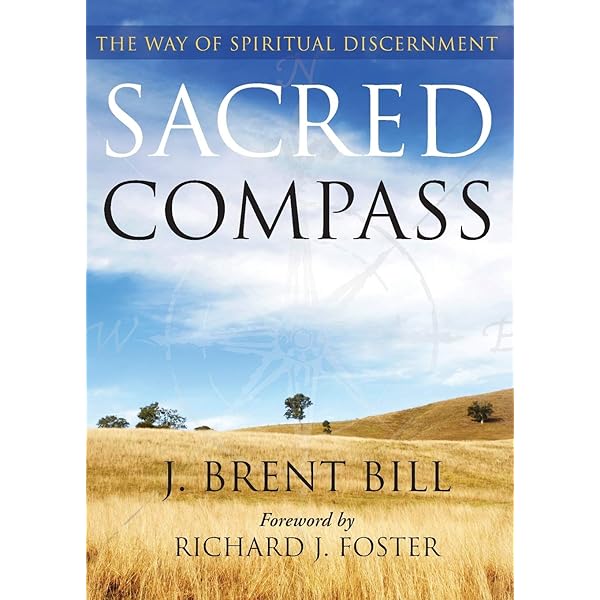
Sacred Compass: The Spiritual Way of Discernment by J Brent Bill

Book Cover

This book is written by an American Evangelical Quaker. So there are a number of things that need tackling before getting into the book. I have learnt that while Quakers are often seen in this country as liminal to Christian orthodoxy in the US they come in two varieties. There are those who are theologically in a similar position to UK Quakers and there are the Evangelical Quakers who clearly are orthodox though pretty liberal with respect to the Christian tradition but hold to elements of the Quaker tradition as well. J Brent Bill comes from this Evangelical stream. As such his theology would be a pretty close fit with that of many URC  congregations particularly those that draw on elements of Separatism. Secondly, through Ship-of-Fools I have become aware that Quakerism has a wholly separate tradition of spiritual discernment and given the way even in this country we overlap I wanted to include some exploration of it within what I looked at.

Firstly this is not a book that places the spiritual accompaniment in a wider context. The metaphor used is deliberately that of a compass and not a road map or a SatNav. He also has the Puritan idea that what is right for one is not necessarily right for another. To illustrate this he uses the Draft in the US and the decisions made by him and two friends. One friend coming from a more Radical Quaker tradition openly resisted, the other friend  a Lutheran who could have been excused sought to go and he himself having no clear guidance sought to delay. Though the responses were very different yet each decision was brought out of who that person was and their journey with God.

Secondly, core to discernment processes are  leadings with certain characteristics that he lists in his chapter on paying attention he suggests testing out leadings against:

  • the Fruits of the Spirit
  • caring
  • a sense of harmony with God
  • generosity
  • persistence
  • rightness
  • surrender of our wills to God’s.

He also suggests that they should come from within and not imposed from outside.

He deals with being lost times and I found myself quoting him while on the Spiritual Direction session simply because he says that in the New Testament

lost is simply lost, not damned or condemned.

I added that I suspect if you sense yourself as lost it is the first step towards being found.

He outlines a process which passes through sensing, waiting and acting. In the discernment process, we are moving continually back and forwards between the stages or completing the circle. He describes spiritual friendship as a

friendship between people committed to each other and to the deepening of their faith lives

He talks of what Quakers call “Weighty Friends” who are people that others instinctively turn to for spiritual guidance. In some ways ironic because having to explain the times my faith intuition seems able to grasp something ahead I used the metaphor of “thin” as in the Celtic Spiritual  term “thin place“. I think because I am so often surprised by it myself. He describes such people as having a “call:
to create a safe place for spiritual investigation
to embrace hope
to hear the Spirit
to encourage faithful obedience”

I think so far this has been the most useful of the books I have read. In that it has cored me back to what I already sensed and yet has given some form to the process without being prescriptive.

and ends with a city of Gold

That title comes from a hymn whose first verse goes

God has given us a book full of stories,
Which was made for His people of old,
It begins with the tale of a garden,
And ends with the city of gold.

The verse captures rather succinctly the breadth of the Bible from creation to Revelation. The rest of the hymn focuses on the gospel but I want to look at the beginning and then end and relate them to politics.  What I want to take is narratively we are between the Garden and the City. Politically we have a spectrum which I will characterize as conservative to liberal. What I think is that it is quite useful to see the two as trying to direct our attention to one of the ends.

Let me take the easy one first. The conservative end of the spectrum the aim is to return to the Garden of Eden. It will be only in the case of a few religious nutters that that is taken literally. Rather what the Garden of Eden stands for is an imagined perfect past which they want society to return to. They want to put the genie back in the lamp and the apple back on the tree for then we can live happily for they think then the lion will lie down with the lamb and we will live in a good society. The ideal for that society is built of images of the past and the aim is to return there.

If that is the conservative one, then the liberal one must be looking forward to the City of Gold. We are here talking revelation, judgment day and the new Jerusalem.  In other words, liberals should have a well-developed eschatology. The problem is that on the whole they do not. I do not mean a cohesive single format, I am not really talking about Utopia here but a bricolage of the images, ideals, and principles that create a rich and desirable portrayal of a future reality. These ideas do not need to be compatible. I am not asking Liberals to be any more reasonable about their golden age than I think conservatives are. If you like we need stories of the city of Gold.

Unfortunately, my feeling at the moment is the entire eschatology is a combination of the formalism of human rights, a notion of equality and being nice or framed with if we campaign hard enough we will achieve it. We need to do better our stories need to grow.

My suggestions for getting there by liberal Christians

  1.  Drop the idea that we can bring about the Kingdom of God. This does two things. Firstly it leads to burnout with people carrying doing the same campaigning  long after it has ceased to be effective. Secondly, it has watered down our vision to what may be possible. Though we should work towards the establishment of the Kingdom the ultimate responsibility for heralding its coming lies with God.
  2. We need to rethink our theology. A theology that is anthropocentric tends to work in times of ease but leaves little to  inspire in times of need. We need humility to acknowledge that while God has gifted us greatly, he has not handed the world over to us. It is time to become more theocentric again.
  3. We need to visit the past. In WWII there were theologians who made sense of resistance even in dire circumstances. The Churches resistance to Hitler was not led by Dietrich Bonhoeffer but by Karl Barth. The isolationist USA was given a theology of engagement by Reinhold Niebuhr, not his brother Richard. I say this as a contextual Reformed theologian who believes that the faith needs restating for every age. However, we can only restate if we know our past and find the resources in it to re-imagine the future.
  4. We need to think again of the nature of the Kingdom of God. We have made it too much in the image of Western civilization. with hard boundaries of territory and clear distinction drawn between them and us. God is Other, and those who are other uniquely challenge us to see the image of God in them. We do not have to like them; we do have to see the divine in them. If a real alternative to the current capitalist system is going to come about it is not going to be the work of wealthy white males (Sorry Marx and Lenin).  They have too much opportunity under the present system. Crucially such a group will have a new anthropology (understanding of what it meant to be human) that empowers them.
  5. We need to rethink our place in the World. If our theology is too anthropocentric then so is our views on creation. Indeed they tend to be highly egocentric as we view the world first through our concerns, then through the concerns of those close to us, and so on until the rest of creation comes way down the list. If we are called to be stewards of Creation (a reading of Genesis 1:26) then we are bad stewards (Matthew 24:48-51). I am not really happy with that, this planet is more than somewhere to look after while its true Master is away. We need to start telling the story when we are not the hero.
  6. We need to take sin seriously in all its guises. I do not subscribe to the Garden of Eden story and I believe good is more firmly ingrained in the human psyche than evil. However, I find the narrative of the fall as the pervasive taint of evil in all human activity a good metaphor. That means we need to look for our own failings, we need to be aware of our partial sightedness (we still see but not clearly). The converse is also true, we need a theology that takes God’s judgment seriously. I believe is more interested in our humanity towards each other than in much that the church and society spout. That does not let us have a God where everything goes, it is just different things that are banned.
  7. We need to start small, big prizes are all very well but it is the small scale that is going to make the difference. I do not really care who is in the Whitehouse as long as it is thinkable that someone who has spouted the views Trump has can be. I am not talking legislation or censorship; I am talking cultural change and that happens in hundreds of small incidences that occur every day.  In a sense, I do not want to beat the conservative but to be such a way that they come alongside us. There is space for this, the small scale institution has been significantly undermined in recent decades.

Many will be calling for action and I can see the attraction in that. What I want to suggest is that at the moment we have work to do that needs doing before we can take that action. My concern is if we rush into action we will only gain a pyrrhic victory where the price is paid by the very people liberals are supposed to be seeking advancement for. That unless we are deliberate about imagining and re-imaging  the Kingdom of God then in striving for our aims we will end up losing that which we count as central.

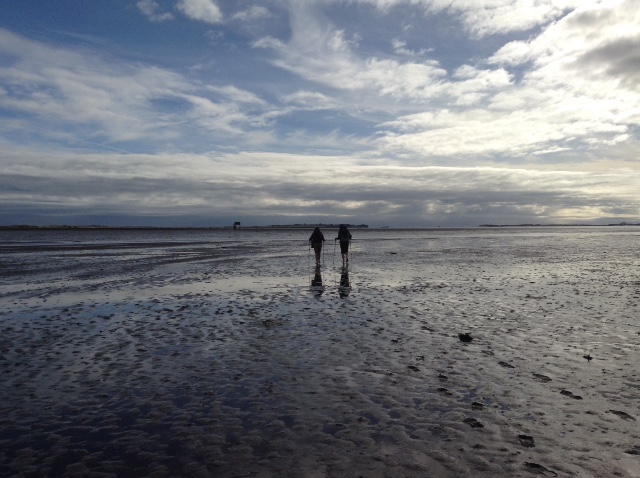
Pilgrim Path

past the water channel
that marks the boundary
of the arrow-grass salt marsh
we finally step out onto mudflats
then awkwardly hop about
as we remove clumsy boots
tie  laces together
and hang them from our packs
then roll our trousers above the knee
in preparation for the traverse
cautiously we move
trying to avoid the glasswort
in case it is slippery seaweed
towards where the poles
point heavenwards
in an otherwise horizontal world
the left behind causeway becomes
just a distant murmur of traffic
drowned by the keening of seals
hidden in the light’s vastness.

sanderlings flicker-feed beside us
a heron languidly flaps by
black-backed gulls speed overhead
between blueness of sky
and its browned reflection in the sand
we walk between masts that mark
the safe route across this unveiled
sea-wilderness that stretches
the horizon

broken shells sharp against our feet
seagrassed mud-mires grasp our legs
firm bottom runnels cool our calves
soft sands ooze between our toes
each step a different experience
each step a repeat of all others
a pole in front
one behind
mesmerised
there is no map
or sense of distance covered
only the journey

yet this too is finite
eventually we come
to the point
where marram grass rises
above sand-dune
and we reach landfall

On straying and finding the trail

When I am walking a long distance path I do not aspire to get lost. I am happy to take my time over the journey but actually getting lost at best means it will take longer and at worst is dangerous. To this end I use multiple navigation techniques:

  • Waymarking – that is keeping a watch out for marks made by others that show the correct route of the trail
  • Route Map and Guidebook, used for imaging the trail in advance and for checking I am still going the right way when I have not seen a waymark for a while
  • GPS with the trail on it to check I am still on the route when I start panicking
  • OS maps of the area (1:25,000) and compass for when I know I am off the trail and I want to get back on.

What should be obvious  is that following a trail takes effort. However, for 90% of the time waymarking is sufficient. That is following the directions from one waymark I immediately start looking for the next. If the trail is difficult then the next waymark is visible from the present one, if the trail is easy to follow then it can be quite a while between waymarks. Normally when I get the route map out it is to check I have not missed a waymark because I have been following a well-defined trail. Usually, I am panicking.

Walking St Cuthbert’s Way between Wooler and Beal it crosses Weetwood Moor. About two-thirds of the way across it takes a 90-degree turn. However, a clear path runs straight ahead. When I was crossing Weetwood Moor another couple of people walking St Cuthbert’s Way called Chris and Peter were walking about fifty yards behind me. We had got to know each other over the previous days on the route. I missed the waymark for the turn! I started to get suspicious when I went through a gate which was not waymarked (gates normally are) and half way through the next field I checked my GPS and I was clearly off route. At this point, I shouted back to Chris and Peter who were still following me (I was about 150 metres off route).

We together traced our steps to the turn-off and started out again. This time, I let them lead (I was obviously not doing too well this day). The net result was we promptly got off route again by heading across a field instead of staying by the wall. The ground we travelled on was decided tricky and Peter and Chris did not fancy retracing for the second time in the day. Nor actually did I. For the one and only time in walking the route I got out the OS maps. I was able to place us and also able to point out that across the wall at the other side of the field to the gate we were at was a quarry. Peter did not believe me and went to check finding out that it was indeed the case. I was, however, also able to point out it might be possible to walk around the quarry by crossing the wall further on. This is what we did though we ended up hacking our way through bracken and a steep descent down to the road across a field. We came out back on the path and the view gave a clear indication of where we were to walk. When we were past this we were on territory where I had walked doing the Northumberland Costal Path.

Intriguingly others also walking the way got lost in much the same way at exactly the same point so we were not complete dunces. However, I find getting lost was instructive.

Firstly, being with people when lost is far better than being lost and alone. When making decisions on how to get back, groups tend to balance each other out. However, just because someone is in front of you on the same journey does not mean they are on the right track!

Secondly, both getting lost was because we were not careful enough. I should have been looking out for the turning in the first case and in the second we should have spotted that the path ran next to the wall once we were through the gate. In other words checking waymarks against maps and maps against waymarks is a good idea.

Thirdly there are two ways to get back on the route: retracing or detouring. Usually, preference is for retracing and the bias should always be for that. Detouring frequently takes you across tougher ground and can lead you into danger. However, there can be good reasons to detour such as when the ground already covered is difficult to cover. You are balancing possible future danger against known past danger. Again the ability to consider this with others is important.

I am careful of what I am drawing, but I am aware that I am in uncharted area spiritually. I need to find a way across and the route back is actuall to a dead end. I initially thought that I should look for those who may know something of the territory, maybe I still should but I am now aware they may be heading in the wrong direction and retracing is expensive. I do, however, know that I will value companions who may or may not equally be seeking routes across the terrain. The ability to seek a way forward together seems to me a great blessing.

Solitary Walking – a Reformed Spiritual Practice?

This is initial thinking and it is not simple.

Firstly, one of the big shocks of my thesis was that the Reformed Spirituality is instinctively Green. It is really weird because the people who are most surprised by this are the Reformed.  The idea that getting out into the natural world is good for the soul seems to be deeply embedded and has deeper roots than the idea that we are the driving spirituality of capitalism. The Green nature of Reformed may well stem from John Calvin’s idea of the natural world as the theatre of God’s Glory. Or rather it may well be that John Calvin’s own spirituality connected with the natural world which led to his doctrine of the world as “theatre of God’s Glory”. That is the connection made in  Ravished by Beauty by Belden C Lane. If so we are also called not to turn it into some safe primary school image of itself but to see it in its complexity with the dark and the dangerous included. I am never quite sure whether I like God, God is far too challenging for the word “like”.

Secondly, we are inherently an active tradition. This means that we like to tackle problems and achieve things. The idea of sitting quietly in a room does not fit naturally with who we are, so the idea that we should go out into the natural world and just breathe in the beauty is not going to fit with the Reformed activism. Here walking comes to our aid. We are doing something; it might not be getting us very far, far quickly but we are doing something.

Thirdly, there is a substantial literature on spiritual aspects of walking, quite a bit of it generally secular. However, what is probably more important to the Reformed Christian is there is a strong linkage with radical ideas of society and justice. Walking is not a practice that gives us just space but it also connects to radical views on what society is. People such as Peace Pilgrim, Jarrow Hunger March, and this teenager against climate change have used walking as a means of engaging in wider aspects of society.

Fourthly, Pilgrim sites may be un-Reformed but the journeying is far more ambiguous particularly within the Separatist tradition in England. It is the tradition that both created the Pilgrim Fathers and Pilgrim’s Progress.  The metaphor of the Christian life as a journey runs deep. It is also true that if Geneva is the birthplace of the Reformed tradition then it is also a tradition whose creation was dominated by refugees. There is no accident in the Reformed traditions perpetual return to the stories of Exodus and Exile. We are a travelling people and that goes for the English Reformed as much as anyone due to the Five Mile Act.

So walking in the countryside seems to be a good match with Reformed Spirituality. What do I mean by Solitary Walking? The normal term for hiking alone is Solo Hiking. What I want to get at with Solitary Walking is the deliberate embracing of the spiritual side of walking. Solitaries are another term for hermits so in this respect, I am exploring a spirituality that links with the eremitical tradition rather than the monastic.  So here are the Spiritual connections I see.

Firstly the Bible has lots of people travelling and because of the history of the Bible, a lot of these journeys were on foot. So we assume that Adam and Eve left the garden on foot, a journey from, not a journey towards. Abraham is called to journey (actually it is his father Terah who starts off the journey but there is no account of the call of Terah), the  Exodus,  Ruth and Naomi’s journey, the Exile and Return, Jesus’ peripatetic teaching ministry in Galilee and Paul’s missionary journeys are all stories of travel. There is no lack of travel during God’s revelation. Perhaps it could be argued that God is able to reach people particular when they are moving, it is the stationary periods where things particularly go wrong.

Secondly walking is physical, repetitive and slow. As such it is at odds with much of the modern culture which focuses on the new, the virtual and the quick. We become, myself very much included, stimulation junkies. Walking allows us to lower our desired level of stimulation without us going to the cold turkey of a plain room, silence, and stillness. Let me deal with each term in order. Walking is physical, you need to be at least partly present in the moment or you end up walking into things whether lamposts, other people or dog dirt. There is, however, more as the art of walking is keeping going and that means paying attention to very practical things such as food, what you are wearing and how far it is until you next rest. It thus in a very practical way brings you into the present. It is repetitive in that involves the simple task of putting one foot in front of the other, usually several thousand times in a days hike. In this perhaps it fits with a number of other spiritual practices such as bead prayers (e.g. the rosary) and  mantras (e.g. the Jesus prayer). Thirdly it is slow. I walk relatively quickly about 5km per hour on a reasonable terrain. It still takes me two hours to walk ten kilometers something a car cover in about 10 minutes! That means things change more slowly and I begin to notice things simply because I have the time to.

All of the last two paragraphs apply equally well to group walks as well as solitary ones. However, the solitary nature of a walk brings other spiritual aspects. These are silence, vulnerability, and freedom. I will take each of these as I suspect I am applying them in a bit of a different way.

Silence is rarely complete when walking, there is nearly always the crunch of your feet. However, when walking alone and not having a companion to talk with one of the things you do get is consistent big chunks of time when you are not trying to communicate with others. The only conversation you have is that which goes on in your own head.  The big advantage, therefore, is you actually get to listen to yourself  consistent spell of time. There is so much going on in modern life that distraction is everywhere. Although not necessarily physically noisy (though many distractions are) distractions are noisy in the sense used in signal processing. This noisiness means we loose connections with ourselves in much of modern life. The process of walking alone reduces the level of distraction so that we can hear ourselves and possibly in that gain some connection with God. However, unlike a silent retreat, it does not have the effect of a dive in off the high diving board into complete silence.

Vulnerability is not popular these days. We try and make ourselves secure against the need for other people. A single person is often seen as intrinsically vulnerable. I am dependent quite often on the kindness of strangers whether it is the offer of a cup of tea, helping me with directions or advice about local transport, the kindnesses are all welcome. In our seeking of self-sufficiency, we often cut ourselves off from receiving these kindnesses. This gives us the illusion of not needing others. What travelling as a solitary person among other people does is draw our attention back to our interdependence.

I really considered not including freedom in the list. It is perhaps not the usual item included in the spiritual practices and yet for me it is intrinsic to the process. There is on one level a very basic freedom, I have usually a number of miles to walk in a day and provided I cover those miles exactly how I do it and which paths I follow is totally within my control. It can feel quite liberating to take a path that is not that specified in the guidebook when appropriate. It reminds you of your self determination. On another level it gives a different freedom, that is the demands for time and attention most people live with most of the time. I am slightly disconnected from the continually on society that is part of modern life. If an email comes to work that needs urgent attention then it has to wait as I cannot deal with it until I have proper connections. What is more the people I meet do not know me, they are meeting me for the first time and thus have no expectations. I do not feel I am expected to be the canny statistician, dutiful daughter or loyal friend as no-one knows those personas. Personally I seem to attract these projected personas and they are not always compatible with each other.

Finally, having made a case for solitary walking as a spiritual practice largely suited to Reformed Spirituality let me point out why can only ever be part of the experience. I, myself and my shadow with the Bible are never sufficient within the Reformed tradition to be the Church. The Church must always consisted of an attempt to belong to a community. Some of this I believe goes to the heart of the Gospel where we have a God who seeks those who are separated from him. Other parts are very practical, loving people as an abstract idea is a form of wishful thinking, we can only really love people in the concrete physical reality of the present. Finally, my PhD has persuaded me that the discipline of the Church is realised within the life of the local congregational community.

That said I am still working on this and am not sure where it is leading.

[mla-start][mlabook author=”Belden C Lane” title=”Ravished by Beauty” city=”Oxford” publisher=”Oxford University Press” year=”2011″ medium=”Hardback” addt=”ISBN:9780199755080″][mla-end]

Testing the Waters – Reaching out to “Dones”

This is a think piece because I am reassessing.

About a decade a book came out called “A Churchless Faith” which broadly argued that those who were leaving the Church were Stage IV  in the Fowler Stages of Faith and that this made them less than docile sheep in the flock.

Now I am not convinced. Certainly I understand that there are congregations and traditions that like conformist sheep. I have two cautions. Firstly this is to overlook the role power plays in this situation. The transition between III and IV is often connected with a change in power dynamics. The desire is often to be more actively engaged in the decision-making process. Now it might be genuinely a difference of stage, or it might well  be a situation of the abuse of power. If it is abuse we are being dishonest by referring to it as a stage difference, equally if it is power struggle does the stage actually matter? The second reason is that it typecasts all congregations as a certain type associated particularly strongly with independent Evangelicals and denominations with strong hierarchical control. There are a lot of congregations out there where this is not the norm. Indeed my experience of URC was that the desired church member was someone in stage IV. That is questioning and engagement with theological ideas and such was actively encouraged.

That said I am in the process of reassessing. Firstly I have come increasingly aware of the number of members in United Reformed Church congregations who were “Dones” and are testing the water again. Secondly, I am struck with how hard many “Dones” have worked to maintain a relationship with the institutional church. Quite often people who have given up have tried several congregations before finally leaving.

There are several things that I notice:

  1. Unlike many “Nones”, “Dones” may have a fair grasp of the gospel. The idea that sending them on Alpha or another basic introduction to Christianity is they way to start them off is often a BAD Idea. It is a denial of where they are coming from.
  2. They may indeed have a wrong understanding of the gospel but that is not the same as no understanding and what one congregation considers “wrong” another might accept. Correcting ideas that people have already accepted needs to be done carefully.
  3. The  like many people who have been hurt they are pastorally and politically difficult to handle. They are likely to have sensitivities that you know nothing about. They may be cautious about saying anything at all or go to the other extreme and always have loud views. Both approaches are methods of testing the water.
  4. There is a good chance that they have some sort of involvement burn, whether that is burnout because too much has been expected of them or catching too much of the heat from a hot internal politics.
  5. You need to consider that there has at least been a breakdown in fellowship in their Christian experience. Even if it is the case that the congregation they previously belonged to has had to close and they were happy with it right to the end.

A congregation which has a lot of former “Dones” can thus be very turbulent indeed. Ever so often things will get blown out of all proportion to the intention. It maybe something as simple as singing a hymn two Sundays running.

A congregation who wants to be a place where “Dones” can edge back into membership, and I happen to think many URCs could do this, needs to think seriously about how it deals with the following:

  • Good governance and open decision-making structures –  You want to be trustworthy and seen to be trustworthy. Remember these people have been hurt in their encounters with power in the church previously. Be clear about what you expect from people with responsibility and make sure it applies to all. Work on having checks and balances.
  • A theology of restoration – partly a theology of healing, partly one of forgiveness and with something more as  there is a need to get beyond the grievances and hurts that “Dones” carry.   They have often made the first step but can you offer then something that is worth risking being hurt again for or are they better off in the safety of being done with Church
  • A big emphasis on pastoral care – as the place where restoration is worked through. I do not simply mean the building of the relationship between minister and “Done” or elder and “Done” but the care that the congregation gives each other.  How does pastoral care fit within church arguments? It is worth thinking about because the one thing I can be certain of is these arguments will arise.

[mla-start]

[mlabook author=”Jamieson, Alan” title=”A Churchless Faith: Faith journeys beyond the churches” city=”London” publisher=”SPCK” year=”2002″ medium=”paperback” addt=””]

[mlabook author=”Fowler, James W.” title=”Stages of Faith: The Psychology of Human Development and the Quest for Meaning” city=”San Francisco” publisher=”HarperOne” year=”1995″ medium=”Paperback” addt=””]

[mla-end]